Afterschool: Infuse Your Projects with Handwritten Charm
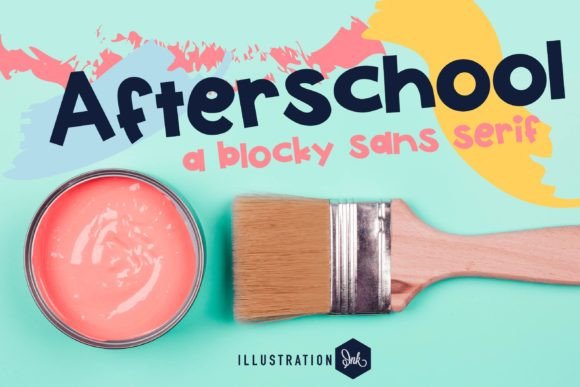
There’s a specific kind of energy we associate with the hours immediately following the school bell. It is a time of release, creativity, and unstructured play. In the world of typography, capturing that specific feeling of joyous abandon is rare, but the Afterschool font manages to do exactly that. If you are a designer, content creator, or business owner looking to break away from the rigidity of corporate sans-serifs, Afterschool offers a compelling, blocky, and incredibly crafty handwritten aesthetic that instantly warms up a layout.
However, do not let the playful description fool you into thinking this is merely a novelty item. Afterschool is a versatile tool designed for modern communication. It bridges the gap between the raw authenticity of handwriting and the legibility required for professional design work. It is a typeface that doesn't just sit on the page; it speaks to the viewer with a friendly, approachable voice.
Understanding the Afterschool Aesthetic
Typography sets the tone before a single word is read. While a serif font might whisper tradition and a sans-serif might shout efficiency, Afterschool strikes a chord that feels human and grounded. Its defining characteristic is its "blocky" construction. Unlike some handwritten fonts that rely on flowing cursive or loose, messy scrawls, Afterschool maintains a solid structure. Each letter feels intentional, crafted with a deliberate weight that ensures it holds its own against busy backgrounds.
The "silly" and "crafty" elements come through in the subtle imperfections of the letterforms. You will notice slight variations in baseline and shape that mimic the natural pressure of a marker or crayon. This is the secret ingredient to its charm. It removes the sterile, automated feel of digital text and replaces it with a tactile quality. For audiences ranging from educators to entrepreneurs, this human element is crucial for building trust and relatability.
Key Characteristics of the Typeface
- High Legibility: Despite its handwritten nature, the blocky structure ensures that words remain readable even at smaller sizes or from a distance.
- Playful Weight: The font has a substantial visual weight that makes it excellent for headers and focal points without requiring bold styling.
- Creative Spirit: It avoids the stiffness of architectural lettering, favoring a flow that suggests imagination and fun.
Where Afterschool Truly Shines: Practical Applications
The true test of any typeface is its utility. How does it perform in the wild? Afterschool is surprisingly adaptable, serving a wide range of contexts from personal projects to commercial branding. Its ability to convey warmth makes it a favorite for anyone trying to lower the barrier between a brand and its audience.
1. Branding for Small Businesses and Startups
For small business owners, first impressions are everything. If your business model relies on approachability—think bakeries, boutique agencies, tutoring centers, or artisan crafts—Afterschool is an excellent choice for your logo or tagline. It tells customers, "We are approachable, we are creative, and we care about the details." In a market saturated with sleek, cold minimalism, a blocky, joyful font can be a strategic differentiator.
2. Educational Materials and Environments
Educators and publishers of children’s content will find Afterschool invaluable. Reading materials for young learners often suffer from being too dry. Afterschool mimics the handwriting style that children are learning to emulate, making it less intimidating. It can be used for headings in worksheets, fun facts in margins, or titles for school newsletters. It adds a layer of engagement that standard "Comic Sans" alternatives often lack, providing a more mature yet still playful alternative.
3. Digital Marketing and Social Media
For marketers and bloggers, standing out on a crowded feed is a daily battle. Afterschool is perfect for Instagram stories, quote cards, and email headers. Its "crafty" nature draws the eye, increasing the likelihood that a user will stop scrolling. Because it feels personal, it works exceptionally well for "handwritten" notes from the author or calls-to-action that need to feel like a friendly suggestion rather than a demand.
The User Experience: Why Typography Affects Engagement
When we discuss design, we often talk about aesthetics, but we must also discuss user experience (UX). The fonts you choose directly influence how your content is processed. Afterschool contributes positively to UX in several specific ways:
- Reducing Cognitive Load: Because Afterschool is easy to read, it doesn't force the user to squint or decipher messy loops. The blocky nature stabilizes the text.
- Emotional Resonance: Typography triggers emotional responses. The joyful nature of Afterschool can put a reader in a positive mindset before they even engage with the core content.
- Visual Hierarchy: It pairs exceptionally well with clean sans-serifs. Using Afterschool for headers and a standard font like Arial or Helvetica for body text creates a clear, attractive hierarchy that guides the reader's eye.
Implementing Afterschool in Your Workflow
Adopting a new typeface requires more than just installation; it requires strategy. To get the most out of Afterschool, consider the context of your project. Here are some professional recommendations for implementation:
Pairing Fonts
The golden rule of design is contrast. Since Afterschool is textured and distinct, it needs a quiet partner. Avoid pairing it with other decorative or script fonts, as this will create visual chaos. Instead, use a geometric sans-serif for your body copy. This allows Afterschool to act as the "voice" of the design while the supporting font provides the structure.
Color and Backgrounds
Afterschool looks best when it has room to breathe. It works beautifully on solid color backgrounds or over high-contrast images where a text box is applied. Because the letters have a blocky weight, very dark text on very dark backgrounds can become muddy. Ensure high contrast to maintain that signature legibility.
Spacing and Alignment
Handwritten fonts often benefit from slightly looser letter-spacing (tracking) than their print counterparts. Give Afterschool a little room to breathe to prevent the characters from colliding, which enhances the "handcrafted" feel.
Why This Font Fits the Modern Creator
We live in an era of authenticity. Freelancers, hobbyists, and creators are constantly seeking ways to humanize their digital presence. We are tired of the "corporate look." We want to see the person behind the screen. Afterschool facilitates this connection. It signals that while you may be professional, you haven't lost your personality.
For entrepreneurs, using Afterschool in pitch decks or internal communications can soften the tone, making feedback feel more constructive and ideas feel more collaborative. For marketers, it can transform a standard sales email into a note from a friend.
Final Thoughts on Selection and Usage
When evaluating whether Afterschool is right for your project, ask yourself: "Do I want to be perceived as approachable, creative, and human?" If the answer is yes, this typeface is a strong candidate.
It is a tool that adds joy to the design process itself. There is something satisfying about seeing a headline rendered in Afterschool; it brings a smile to the face. In a digital world that can often feel rigid and algorithmic, injecting a bit of "silly" and "crafty" humanity into your typography is not just a design choice—it is a strategic advantage.
Download Afterschool, experiment with it in your next newsletter, your next social post, or your next branding overhaul. You will likely find that it does exactly what great design should do: it makes your audience feel something. It makes them feel welcomed, just like the freedom of the hours after school. Add this cute font to your toolkit, and watch how it transforms your creative ideas from standard to standout.