Dream Culture: Exploring the Elegance of a New Blackletter Font
Finding the right typeface for a project often feels like searching for a specific key for a lock. The shape of the letters carries weight, history, and emotion before a single word is read. Dream Culture enters the design conversation as a distinct blackletter font that bridges the gap between historical Gothic scripts and modern aesthetic demands. It is not merely a reproduction of old calligraphy; it is a digital reimagining designed to offer class, elegance, and a vintage atmosphere to contemporary projects.
For anyone involved in visual communication—whether you are a graphic designer, a small business owner, or a hobbyist—understanding the nuances of a font like Dream Culture is essential. It offers a specific visual language that can elevate a brand or, if misused, can confuse a message. This guide explores the characteristics of this typeface, who benefits most from using it, and how to approach its implementation with practical skill.
Understanding the Aesthetic: What is Dream Culture?
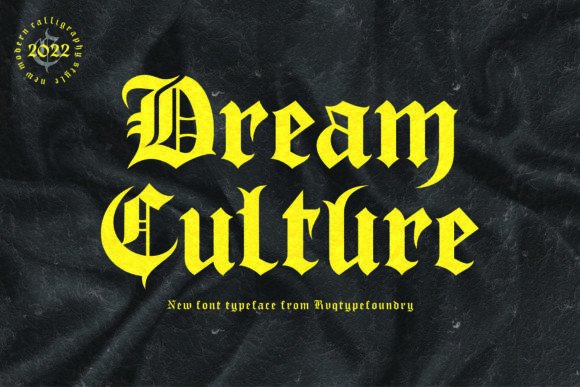
At its core, Dream Culture is a blackletter typeface. Historically, blackletter fonts are characterized by their dense, angular, and highly decorative strokes. They evoke the feeling of medieval manuscripts, old-world craftsmanship, and formality. However, Dream Culture distinguishes itself by softening some of the harshness typically associated with Gothic text.
The font features classy and elegant characters that maintain the vertical intensity of blackletter while incorporating smoother curves. This makes it more legible and approachable than some of its ancestors. The "vintage" quality comes from its texture and weight, suggesting the ink bleed of a broad-nibbed pen or the embossing of a vintage printing press.
The Power of Alternatives
One of the standout features of Dream Culture is its inclusion of alternative glyphs. In typography, a glyph is a specific shape of a character. While standard fonts offer one version of the letter "A" or "g," Dream Culture provides multiple variations. This allows designers to mix uppercase and lowercase styles in non-traditional ways, creating a "beautiful combination" that feels organic rather than repetitive. This flexibility is crucial for creating custom lettering for logos or headers where uniqueness is paramount.
Why Different Audiences Care About Typography
The decision to use a font like Dream Culture is driven by different motivations depending on who you are and what you are building. The visual tone of a project dictates how an audience perceives the content's authority, creativity, and value.
For Graphic Designers and Creators
Experienced designers often seek typefaces that offer versatility within a specific niche. While a standard serif font might be the safe choice, a blackletter like Dream Culture offers a way to make a bold statement. Designers care about the technical quality of the vector paths and the availability of OpenType features (the technology behind alternative glyphs). For a designer, the font is a tool to solve a visual problem: how to convey heritage, luxury, or edginess without using a cliché typeface.
A practical example is album art. Musicians in genres like hip-hop, metal, or ambient electronic often utilize blackletter fonts to bridge modern sound with classic aesthetics. A designer can use the alternative glyphs to spell out a band name with a rhythmic flow that standard block letters cannot achieve.
For Entrepreneurs and Small Business Owners
Business owners evaluate fonts based on brand identity and commercial value. A small business owner running a barbershop, a vintage clothing line, or a craft distillery needs a logo that instantly communicates the "vibe" of their establishment. Dream Culture offers an immediate shorthand for "traditional quality" and "attention to detail."
However, business owners must also consider legibility. If a font is too complex, potential customers might not be able to read the store name from the street. Dream Culture’s elegance makes it suitable for logos and signage, but it likely requires pairing with a simpler, highly legible font for body text on menus or websites. The priority here is reliability—choosing a font that prints well on different materials, from business cards to shop windows.
Practical Application: How to Use Dream Culture Effectively
Using a decorative blackletter font requires more care than using a standard sans-serif like Arial or Helvetica. The goal is to use Dream Culture as a focal point, not as background noise.
Mixing Characters for Visual Interest
The specific instruction to "mix the uppercase and lowercase with the alternative glyphs" is the key to unlocking the font's potential. If you type a word using the standard keys, it will look good. However, by accessing the glyph panel in software like Adobe Illustrator or Photoshop, you can swap out specific letters.
For instance, if you are designing a header for a wedding invitation, you might use a swash version of a capital "D" from the alternative set, followed by standard lowercase letters. This creates a hierarchy within the word itself, drawing the eye to the start of the name or title. This technique transforms the text from a mere label into a piece of art.
Pairing with Other Fonts
Because Dream Culture is visually dense and stylistically strong, it rarely works well as the only font in a design. It demands a partner.
- For Contrast: Pair it with a clean, modern sans-serif font. This juxtaposition highlights the vintage elegance of Dream Culture while ensuring the message remains modern and readable.
- For Harmony: Pair it with a classic serif font. This works well for editorial layouts, such as magazine covers or blog headers, where the goal is a sophisticated, literary feel.
Evaluating Ease of Use and Learning Value
For beginners, blackletter fonts can seem intimidating. The terminology—ligatures, swashes, alternates—can be overwhelming. However, embracing Dream Culture can be a valuable learning experience. It forces the user to learn how to use OpenType features and how to manually kern (adjust spacing between) letters to ensure they fit together perfectly. This is a practical skill that elevates a hobbyist into a more competent creator.
Matching Dream Culture to Your Project Goals
Before downloading and installing, it is helpful to audit your specific needs. Not every project calls for a vintage blackletter aesthetic.
When to Choose Dream Culture
You should consider this font if your project involves:
- Event Branding: Invitations for galas, weddings, or themed parties that require a touch of sophistication.
- Product Packaging: Labels for coffee, spirits, or artisanal goods where heritage and craftsmanship are selling points.
- Merchandise: T-shirt designs or posters where the text is the central visual element.
- Digital Headers: Blog post titles or YouTube thumbnails that need to grab attention quickly with a stylized look.
When to Look for Alternatives
If your primary goal is speed and readability for large blocks of text, such as a user manual, a long-form report, or mobile app interfaces, Dream Culture is the wrong tool. The decorative nature of blackletter fonts causes eye fatigue when read in paragraphs. In these cases, prioritizing a clean sans-serif is the better decision for user experience.
Conclusion: The Value of Distinct Character
In a digital landscape saturated with generic, system-default fonts, choosing a typeface like Dream Culture is a deliberate act of curation. It signals to the viewer that the creator cares about the historical resonance and aesthetic quality of the work.
Whether you are a freelancer looking to expand your typographic toolkit, a business owner trying to capture the essence of your brand, or a hobbyist creating a personal project, the font offers a blend of class and vintage charm. By utilizing the alternative glyphs and mixing character cases, you can unlock a level of customization that makes your work feel truly bespoke. Ultimately, Dream Culture is about finding the balance between the weight of the past and the clarity of the present.