Succulent: A Hand-Lettered Font That Brings Playful Energy to Your Projects
When you're working on a project that needs personality without pretension, the right font can make all the difference. Enter Succulent, a hand-lettered typeface that balances charm with practicality. This isn't just another decorative script—it's a thoughtfully designed tool for creators who want their work to feel approachable, lively, and unmistakably human.
What Makes Succulent Stand Out
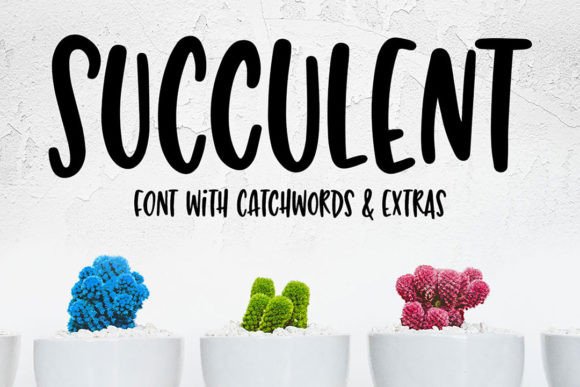
Succulent is a double-uppercase, tall and skinny font with a distinctive bounce that gives text an energetic, hand-crafted feel. The letterforms are designed to work together harmoniously while maintaining that imperfect, organic quality that makes hand-lettering so appealing. Unlike rigid, perfectly symmetrical typefaces, Succulent embraces subtle variations in baseline and spacing that mimic the natural inconsistencies of actual handwriting.
But what really sets this font apart is its accompanying Succulent Catchwords set. These aren't just the standard "the" and "and" you'd expect—they span multiple languages including English, Spanish, French, German, and Portuguese. For anyone creating bilingual content or working with international audiences, this built-in multilingual support eliminates the headache of searching for matching decorative words in different languages.
Real-World Uses for Creators and Small Businesses
Think about the last time you scrolled through Instagram or browsed an online shop. The brands that feel most relatable often use hand-lettered elements in their graphics, packaging, or social media posts. Succulent fits naturally into this space because it captures that handmade aesthetic without requiring actual calligraphy skills.
Small business owners can use Succulent for product labels, thank-you cards, or promotional materials. Imagine a bakery using it for menu boards or a boutique clothing shop incorporating it into hang tags. The font's playful bounce communicates warmth and care—exactly the impression most small brands want to make.
Bloggers and content creators will find Succulent useful for Pinterest graphics, featured images, and quote overlays. The tall, skinny proportions make it particularly effective for vertical layouts where you need text to feel prominent without overwhelming the visual space. It pairs well with clean sans-serifs for body text, creating that popular contrast between polished and playful.
The Pattern Border Trick You Didn't Know You Needed
One of Succulent's most clever features is its collection of repeating patterns. By typing specific letters multiple times, you can generate decorative borders of any length. This is surprisingly useful for digital invitations, newsletter headers, certificate designs, and website dividers. Instead of hunting for border graphics or creating them manually, you simply type and let the font do the work.
The included PDF guide maps out exactly which letters produce which patterns, so there's no guesswork involved. For anyone who regularly designs social media templates or print materials, this feature alone can save significant time while maintaining a cohesive aesthetic across projects.
Considering Your Audience and Context
Before downloading Succulent, think about where you'll actually use it. This font excels in contexts where personality and approachability matter more than formality. It's ideal for:
- Children's products, educational materials, and family-oriented brands
- Casual lifestyle content, wellness blogs, and creative portfolios
- Event invitations, party supplies, and celebration-themed designs
- Product packaging for artisan goods, handmade items, and specialty foods
- Social media graphics where you want to stand out from generic corporate aesthetics
However, Succulent probably isn't the right choice for legal documents, academic papers, or brands that need to project serious authority. Its playful energy could undermine the credibility you're trying to establish in those contexts. Knowing when not to use a font is just as important as knowing when to embrace it.
Language Support That Actually Matters
With over 350 extended characters spanning Latin-1, Latin Extended-A, Latin Extended-B, and Latin Extended Additional sets, Succulent handles a remarkable range of languages. This isn't just a technical specification—it has real practical implications.
If you're a freelancer creating materials for clients in different countries, or an educator developing resources for multilingual classrooms, you won't need to switch fonts every time you encounter an accented character. The consistent hand-lettered style carries across all supported characters, so your designs maintain their cohesive look regardless of the language.
Getting Started With Succulent
Your download includes both OTF and TTF file formats for both the main Succulent font and the Catchwords set, plus that helpful PDF guide. OTF files generally offer better compatibility with modern design software, while TTF files work well for broader system compatibility. Having both means you can install whichever works best for your specific setup.
Start by exploring the PDF guide before diving into a project. Understanding which catchwords are available and how the pattern borders work will help you plan your designs more effectively. Test the font at different sizes to see where its personality shines brightest—it tends to look particularly striking at medium to large sizes where the hand-lettered details are clearly visible.
Whether you're designing a wedding invitation, creating social media content for your small business, or putting together classroom materials, Succulent offers a distinctive voice that feels genuinely human. It won't solve every design challenge, but for projects that need warmth, energy, and a touch of whimsy, it's a font worth having in your toolkit.