The Enduring Appeal of Hand-Drawn Serif Fonts in Modern Design
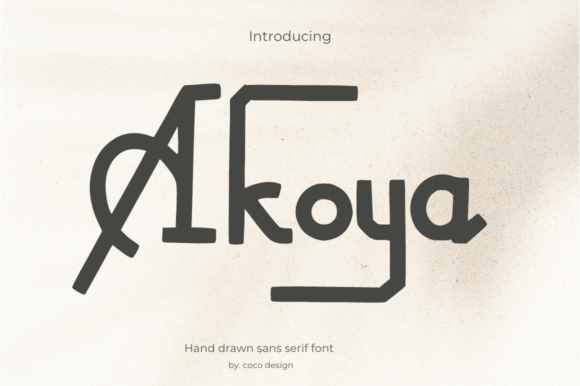
In the vast and ever-evolving landscape of typography, the search for a font that balances classic elegance with approachable warmth often leads designers to a specific category: the hand-drawn serif. These typefaces carry the structural integrity and readability of traditional serifs while infusing each letterform with the subtle imperfections and organic flow of a human hand. Among these, a font like Akoya stands out as a prime example, offering a beautiful and casual aesthetic that finds relevance across a stunning array of applications, from commercial branding to personal celebrations.
Deconstructing the Casual Serif: More Than Just a Style
A casual hand-drawn serif font is not merely a serif with a roughened edge. It represents a deliberate design philosophy that prioritizes authenticity and emotional connection. The defining characteristics create a unique visual language understood intuitively by viewers.
- Organic Strokes: Unlike the precise, geometric lines of digital fonts like Times New Roman, letters in a font such as Akoya feature subtle variations in thickness and terminal points. This mimics the pressure changes of a pen or brush held by a human, creating a rhythm that feels natural and lived-in.
- Playful Serifs: The serifs—the small strokes at the ends of the main strokes of a letter—are present, providing structure and guiding the eye along a line of text. However, they are often softened, slightly curved, or rendered with a less rigid geometry than their formal counterparts. This softening is what grants the "casual" descriptor.
- Varied Baselines: A subtle, often almost imperceptible, variation in the vertical alignment of letters prevents the text from looking sterile. This quality is crucial for evoking a handmade feel, suggesting that each word was crafted individually rather than stamped out by a machine.
The psychological impact of these traits is significant. Where a crisp, modern sans-serif can communicate efficiency and minimalism, a font like Akoya communicates trust, craftsmanship, and a personal touch. It bridges the gap between professionalism and friendliness.
A Spectrum of Application: From Commercial to Personal
The true test of a typeface's value is its versatility. A well-designed casual serif demonstrates its strength by fitting seamlessly into diverse contexts without losing its core identity. Its utility spans professional, creative, and personal domains.
Branding and Commercial Identity
For businesses, especially those in artisanal, boutique, or lifestyle sectors, typography is a cornerstone of brand identity. A font like Akoya is exceptionally powerful here. It is frequently chosen for:
- Product Packaging: On a shelf crowded with bold, stark graphics, packaging that uses a casual serif font invites a closer look. It suggests the product inside is made with care, whether it's a gourmet food item, a natural skincare line, or a craft beverage. The font itself becomes part of the product's story.
- Restaurant and Café Branding: Menu headers, signage, and logos for eateries benefit immensely from a typeface that feels welcoming and authentic. It sets a tone of comfort and quality without the stuffiness of a formal script.
- Labels and Signage: From boutique clothing tags to farmers' market signs, the readability combined with the charming aesthetic makes it ideal for conveying information in a way that feels personal and engaging.
The World of Events and Personal Milestones
Beyond commerce, the font finds a natural home in the realm of personal events where sentiment and style are paramount. Akoya is a perfect choice for:
- Wedding Invitations and Stationery: The wedding industry thrives on a blend of tradition and personality. A casual serif font captures the romance and formality of the occasion while feeling modern and approachable. It pairs beautifully with floral motifs, watercolor washes, and textured paper.
- Book Covers and Posters: For genres like contemporary fiction, memoirs, poetry collections, or even cozy mysteries, this font style can instantly signal the tone of the work. It promises a narrative that is character-driven and emotionally resonant.
- Quotes and Art Prints: When the words themselves are the art, the typography must honor them. The hand-drawn quality adds a layer of intimacy and thoughtfulness, making the quote feel like a personal mantra rather than a generic platitude.
Digital and Editorial Design
In the digital sphere, the need for personality is just as acute. A font like Akoya can be used effectively in:
- Website Headers and Hero Text: It draws the eye and establishes a brand's voice immediately, creating a memorable first impression that stands apart from the ubiquitous clean sans-serifs.
- Blog Post Titles and Pull Quotes: For online publications, especially those focused on lifestyle, design, or storytelling, it adds visual interest and breaks up the monotony of long-form body text.
- Social Media Graphics: In a fast-scrolling environment, text overlays on images or standalone typographic posts need to be both legible and striking. The unique character of a hand-drawn serif achieves this balance.
Practical Considerations for Effective Use
While the appeal of a font like Akoya is broad, its effectiveness hinges on thoughtful implementation. Understanding its strengths and potential pitfalls ensures it enhances, rather than hinders, communication.
Pairing and Hierarchy
A casual serif is a character font, often best used for headlines, logos, and short bursts of impactful text. It pairs exceptionally well with clean, neutral sans-serifs for body copy. For instance, combining Akoya with a font like Lato or Open Sans for paragraphs creates a beautiful contrast: the serif provides personality and flair, while the sans-serif ensures extended readability. Establishing a clear typographic hierarchy is key to a polished design.
Legibility at Scale
The very traits that give a hand-drawn font its charm—subtle irregularities and varied strokes—can become a liability at very small sizes or in low-resolution environments. It is crucial to test the font in its intended context. At small sizes for body text or on low-quality print, the delicate details may blur, reducing legibility. Therefore, it is most reliably used at medium to large scales where its nuances can be fully appreciated.
Context and Audience Alignment
The casual, approachable nature of the font makes it a poor fit for contexts that demand absolute authority, austerity, or technical precision. It would be incongruous on a legal contract, a formal academic paper, or the branding for a financial institution. Its strength lies in its ability to foster connection and warmth, making it ideal for brands and projects targeting audiences who value authenticity, creativity, and a human touch.
The Role of Authenticity in a Digital Age
The prevalence and popularity of fonts like Akoya point to a larger cultural trend. In an era saturated with digital perfection and algorithmic uniformity, there is a growing hunger for the tangible, the imperfect, and the human-made. A hand-drawn serif font is a digital artifact that carries the ghost of analog creation. It satisfies a subconscious desire for authenticity in our visual environment.
For designers and creators, choosing such a font is not just an aesthetic decision; it is a statement of values. It signals an appreciation for craft, a rejection of sterile uniformity, and a commitment to creating work that feels genuine and engaging. Whether it graces the label of a small-batch jam, the invitation to a milestone celebration, or the cover of a debut novel, the font does more than spell out words. It tells a story of care, creativity, and connection, making it an invaluable tool in the modern visual toolkit.