Pumpkin Butter: A Practical Look at This Whimsical Handwritten Font
In the vast landscape of digital typography, finding a font that balances personality with professionalism can be a challenge. Many handwritten options sacrifice legibility for style, or feel too casual for serious applications. Pumpkin Butter enters this space as a distinct alternative—a typeface designed to be both expressive and functional. Its core appeal lies in its ability to inject a human, approachable feel into digital content without compromising on clarity or technical robustness. For creators, marketers, and business owners, this presents a valuable tool for specific communication needs.
Understanding the Core Characteristics
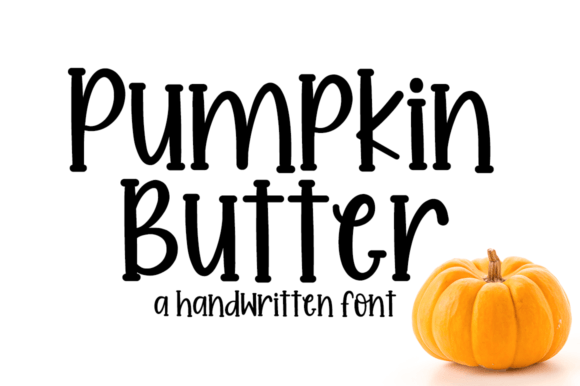
At its foundation, Pumpkin Butter is a handwritten font, but its execution is deliberate and refined. The letterforms exhibit a consistent baseline and x-height, which is crucial for maintaining readability across longer passages. Unlike overly script-like fonts, Pumpkin Butter avoids excessive flourishes that can hinder quick comprehension. The strokes have a natural, slightly uneven quality that mimics authentic penmanship, lending a genuine, crafted feel. This isn't a font trying to look like a child's scrawl; it's a designed system meant to convey warmth and creativity with control.
A key technical feature is its PUA (Private Use Areas) encoding. For the end-user, this means every glyph, alternate character, and ligature is directly accessible through standard design software or word processors without needing specialized OpenType panel knowledge. This significantly lowers the barrier to entry, allowing someone to easily swap a standard 'a' for a stylistic alternate or use a swash to begin a word, enhancing the font's versatility within a single project.
Practical Application and Real-World Performance
The true test of any design asset is its performance in context. Pumpkin Butter finds its strength in applications where a personal, engaging tone is desired. Consider its use in branding for small businesses, particularly in food, craft, or lifestyle sectors. It can work effectively for a bakery's logo, a artisan's product labels, or the header graphics for a wellness blog. The font's whimsical quality helps brands appear more relatable and less corporate, which can be a strategic advantage when building a community-focused audience.
In digital marketing, Pumpkin Butter can serve a specific role. It might be used for call-to-action buttons, pull quotes in an article, or social media graphics where grabbing attention with a friendly vibe is the goal. However, it is generally not suited for body text on websites or lengthy documents. Its handwritten nature, while charming, can cause visual fatigue when read in dense blocks. The professional recommendation is to use it sparingly for headlines, subheadings, or accent text, paired with a clean, neutral sans-serif or serif font for the main content to ensure optimal readability and visual hierarchy.
Evaluating Quality, Usability, and Flexibility
From a technical standpoint, a well-crafted font like Pumpkin Butter should exhibit consistency across its character set. The weight, spacing, and stylistic details of each letter should feel harmonious, whether you're typing a simple word or a complex sentence. This consistency is what separates a professional font from a hastily made one. It ensures that the font behaves predictably, which is essential for designers who need to integrate it into larger projects without unexpected issues.
Usability is directly enhanced by the PUA encoding mentioned earlier. This feature democratizes access to the font's full potential. A freelance designer can quickly experiment with ligatures to create a more custom look for a client's wedding invitation suite, while a small business owner can use stylistic alternates to make their newsletter subject line stand out without a steep learning curve. This flexibility increases the font's long-term value, as it can adapt to a wider range of creative briefs and client requests.
Who Stands to Benefit Most?
The ideal users for Pumpkin Butter are those who need to communicate with a human touch. This includes:
- Freelance Designers and Creatives: They can add it to their toolkit for projects requiring a handmade aesthetic, such as branding for cafes, boutique shops, or event invitations.
- Small Business Owners and Entrepreneurs: Especially in direct-to-consumer markets, using Pumpkin Butter for packaging, thank-you cards, or social media content can help build a distinct and approachable brand identity.
- Bloggers and Content Creators: It can be used for blog post titles, quote graphics, or digital product covers (like e-books or printables) to create a cohesive and inviting visual style.
- Educators and Nonprofits: For creating engaging materials for workshops, community flyers, or educational resources where a friendly, non-intimidating tone is beneficial.
Conversely, it would be less appropriate for legal documents, academic papers, financial reports, or any context where absolute formality, precision, and high-density data presentation are paramount. Its strength is in emotional connection and style, not in neutral information delivery.
Practical Considerations and Recommendations
When integrating Pumpkin Butter into a workflow, a few best practices can maximize its effectiveness. Always test the font at the intended size and medium. What looks perfect on a computer screen for a logo may need kerning adjustments for a large printed banner. Pairing is critical; combine it with a simple, stable font to create contrast and ensure the overall design remains balanced and professional.
It's also wise to consider the audience's expectations. A tech startup's homepage might not be the best fit, but a local florist's online store could benefit immensely. The font should align with the brand's voice and the message's intent. Using it for a limited-time promotion or a specific product line can add variety without overhauling an entire brand identity.
In conclusion, Pumpkin Butter is a thoughtfully designed handwritten font that occupies a useful niche. It offers a blend of whimsy and reliability, backed by practical technical features that make it accessible. It is not a universal solution, but for the right project, it can be a powerful asset for adding personality, warmth, and a human element to visual communication. Its value is realized when used strategically, in appropriate contexts, and with an understanding of its strengths and limitations.